
Author: Tom Morgan Page 9 of 60

Is there really a shortage of land for new homes in Mid Somerset?

Philip Hammond’s recently stated target to build 300,000 new homes a year in the UK is seen by many as fanciful. As demand continues to outstrip supply, building more homes is part of the solution for the housing crisis that has seen the average price paid for property in Mid Somerset rise from £206,536 to £247,511 in the last 10 years.

Many people ask where we will build all these homes? Well it may surprise you that only 4% of land in Mid Somerset is built on – 3.95% to be precise. For the UK as a whole just 6% of land is built on.

88% of Mid Somerset land is farmland (fields, orchards etc.), 6% is natural (moors heathland , natural grassland etc) and 2% is green urban (parks, gardens, golf course, sports pitches etc.).

The four categories are drawn from 44 different land use codes used by the Co-ordination of Information on the Environment (Corine) project initiated by the European Commission in 1985.
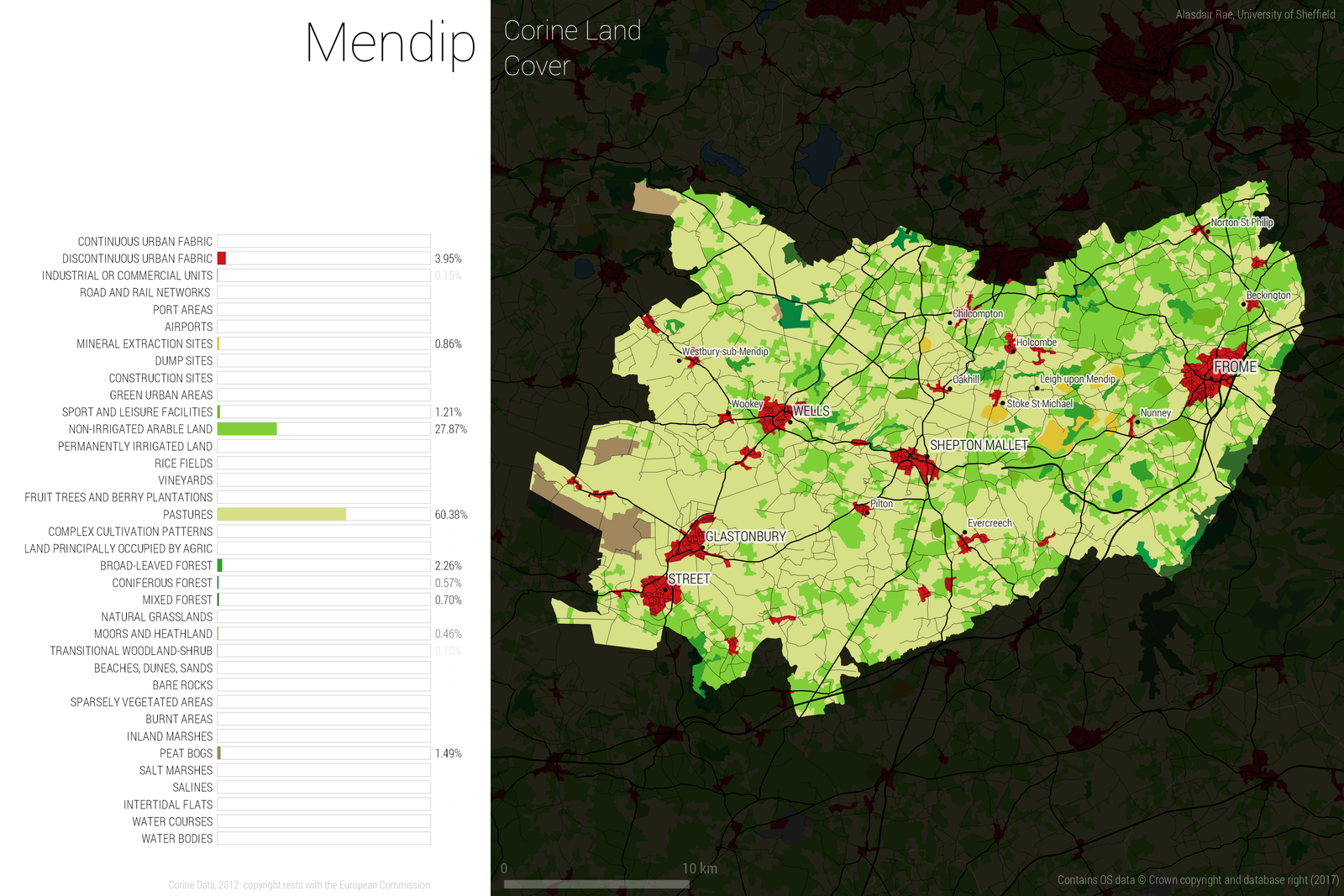
{click on image above to make it larger}

Mid Somerset is greener than you think! The idea that a large part of Mid Somerset has been concreted over is simply not true. Undoubtedly the effect of building has a effect on the environment beyond the footprint of the building from the visual impact to the roads needed for access and with this the pollution (noise, light and air).

I am not suggesting we concrete over every inch of our beautiful county, but the bottom line is we, as a country, are growing at a quicker rate than the households we are building. We need to build more homes in Mid Somerset and we all need accept this and local authorities need to do what they can to make this happen. There will need to be compromises made otherwise house prices and rents will continue to rise exponentially in the future and the next generation here in Mid Somerset won’t be able to buy or rent a home.

Building more homes in villages that the younger generation can afford is something that should be considered. Currently, few people can afford property in the villages. Encouraging first-time buyers and young families into the villages will rejuvenate those things that were once part of village life but have gone into decline in recent years – pubs, post offices, shops, schools, community centres and transport services. Bringing the younger generation into the villages will have a positive impact on village life and the community spirit we all aspire to.

About Tom Morgan

Founder of Jungle Property the multi award-winning letting agent based in Glastonbury, Somerset. I am passionate about property and Glastonbury and about providing the very best advice to anyone who wants the best return on a buy-to-let property investment. For an open and brutally honest opinion on anything in the Glastonbury property market please contact me via tom.morgan@jungleproperty.co.uk

Top 20 least expensive streets in Street and Glastonbury – Part 1 (20-17)

In a recent article (here) I looked at the top 20 most expensive streets in Street and Glastonbury but which streets are the least expensive? First-time buyers will be interested to know where they have the best chance to get their foot on the housing ladder and investors with just a small pot of money will want to know where they can buy a rental property to suit their budget. Using the same methodology as that used for the ‘most expensive’ article I.e. At least 10 properties sold in the thoroughfare in the last 10 years I now bring you the top 20 least expensive streets in Street and Glastonbury. How many of these can you guess?

20 – Woods Road (Street)

Average price paid – £145,778. There are 48 dwellings in Woods Road, 6 of which were built in 1950. The most expensive recorded transaction in Woods Road to date is 19, which sold for £185,000 on 22/07/2016. Woods Road almost certainly gets it’s name from the ancient woodland of Hound Wood which was once a prominent feature in that area. In 1656 Hound Wood covered 50 acres and had 1,200 oaks but was completely cleared in 1841.

19 – Blagrove Close (Street)

Average price paid – £142,778. The name Blagrove has a long association with Street and the wooded landscape that was once part of Street. Blagrove Close comprises 45 homes. 8 of these properties were built in 1980. The property sales that have the highest recorded prices in Blagrove Close to date are 23, which sold on 10/08/2016 and 14, which sold on 27/01/2017 both for £167,500.

18 – Glaston Road (Street)

Average price paid – £141,416. Glaston Road consists of 40 dwellings as well as the Baptist Church of which 17 are flats. The property sale that has the highest recorded price in Glaston Road to date is 4, which sold on 30/07/2007 for £300,000. The Street (Mead) Gate toll house replaced the toll house at Northover bridge in 1783.

17 – Strode Road (Street)

Average price paid – £139,904. Strode Road is home to 183 dwellings and Tor View Court retirement living. The most expensive recorded transaction in Strode Road to date is 56, which sold on 20/01/2017 for £265,000. The least expensive transaction that has been recorded in Strode Road is 143. It sold on 29/01/2001 for £17,920.

The series continues with number 16 in the next article.

About Tom Morgan

Founder of Jungle Property the multi award-winning letting agent based in Glastonbury, Somerset. I am passionate about property and Glastonbury and about providing the very best advice to anyone who wants the best return on a buy-to-let property investment. For an open and brutally honest opinion on anything in the Glastonbury property market please contact me via tom.morgan@jungleproperty.co.uk

Page 9 of 60

Powered by WordPress & Theme by Anders Norén

css.php